
Plenary Speakers 2026

Tianyou Chai China, Northeastern University
Member of the Chinese Academy of Engineering
IEEE Fellow
Keynote Speech Title:Intelligent Integrated System for Optimal Decision-making and Control Based on End-edge-cloud Collaboration
Abstract:To address the challenges that online optimization of operational decision-making and control in complex industrial systems cannot be realized, this talk proposes a unified structure and algorithm for integrated operational optimal decision-making and control, by combining control, optimization, and prediction with AI technology. It also proposed a parameter self-learning and self-optimizing algorithm for operational optimal decision-making and control integrating systems, by combining mechanism analysis with deep learning, and digital twin with reinforcement learning. An intelligent integrated system for optimal decision-making and control based on end-edge-cloud collaboration is developed, by combining the proposed method and the end-edge-cloud collaboration technology of Industrial Internet. The system includes the end-optimal decision-making and control system under actual operation, as well as the cloud-edge collaborative parameter self-learning and self-optimizing system for decision-making and control system. The parameter self-learning and self-optimizing system in digital space collaborates with the optimal decision-making and control system under actual operation. Thus, the end-operational optimal decision-making and control system realizes self-learning and self-optimization. The system has been successfully applied in the energy intensive equipment—fused magnesium furnace and achieved remarkable results in the reduction of carbon emission.
Biography:Tianyou Chai received the Ph.D. degree in control theory and engineering in 1985 from Northeastern University, Shenyang, China, where he became a Professor in 1988. He is the founder and Director of the Center of Automation, which became a National Engineering and Technology Research Center and a State Key Laboratory. He is a member of Chinese Academy of Engineering, IFAC Fellow and IEEE Fellow. He has served as director of Department of Information Science of National Natural Science Foundation of China from 2010 to 2018.His current research interests include modeling, control, optimization and integrated automation and intelligence of complex industrial processes.
He has published 396 peer reviewed international journal papers. His paper titled Hybrid intelligent control for optimal operation of shaft furnace roasting process was selected as one of three best papers for the Control Engineering Practice Paper Prize for 2011-2013. He has developed control technologies with applications to various industrial processes. For his contributions, he has won 5 prestigious awards of National Natural Science, National Science and Technology Progress and National Technological Innovation, the 2007 Industry Award for Excellence in Transitional Control Research from IEEE Multiple-conference on Systems and Control, and the 2017 Wook Hyun Kwon Education Award from Asian Control Association.

Bradley J. Nelson Switzerland, Eidgenössische Technische Hochschule Zürich
Foreign Member of the Chinese Academy of Sciences
Member of the Swiss Academy of Engineering Sciences
Professor of Robotics and Intelligent Systems, ETH Zurich
Keynote Speech Title:Clinically Ready Microrobots
Abstract:Micro and nano robotics have advanced rapidly over the past two decades, driven by breakthroughs in functional materials, processing, and microfabrication, as well as improved modeling, sensing, and control. As a result, microrobots that are clinically relevant, biocompatible, and increasingly biodegradable are now within reach, opening new possibilities for minimally invasive diagnostics and targeted therapy in anatomically confined and delicate environments.
Our group develops magnetic microrobots based on biocompatible composite materials and actuated by externally generated magnetic fields and gradients. Magnetic actuation offers several key advantages for clinical translation, including wireless power delivery, deep tissue penetration, and the ability to generate controlled forces and torques without onboard batteries or tethers. However, realizing robust and safe operation in vivo requires more than microrobot design alone. A central challenge is the development of magnetic navigation systems capable of generating accurate, programmable fields over human-scale workspaces while meeting clinical constraints such as patient access, imaging compatibility, and safety limits.
In this talk, I will present recent progress toward a clinically ready, human-scale microrobot platform, spanning microrobot fabrication, magnetic field generation and control, and closed-loop navigation strategies. I will also highlight emerging applications enabled by this platform, including concepts for telestroke medicine, where rapid, remote intervention could expand access to time-critical care. Together, these advances bring the long-standing “Fantastic Voyage” vision closer to practical medical reality.
Biography:Bradley J. Nelson has been Professor of Robotics and Intelligent Systems at ETH Zurich, Switzerland, since 2002. His research focuses on microrobotics, nanorobotics, and medical robotics. He has established an internationally renowned research group dedicated to translating fundamental scientific discoveries into practical robotic systems. His pioneering work has significantly advanced microrobotics, moving the field from conceptual demonstrations toward clinically relevant applications. His laboratory has also trained numerous researchers who now hold leading positions in academia, industry, and medicine.
Prof. Nelson is a Foreign Member of the Chinese Academy of Sciences, a member of the Swiss Academy of Engineering Sciences (SATW), and a Fellow of IEEE and ASME. His outstanding contributions to robotics, nanotechnology, and biomedicine have been recognized with numerous prestigious honors, including the IEEE Robotics and Automation Society Pioneer Award (2019), the Grand Hamdan International Award for AI in Healthcare (2020), and selection to the Scientific American 50 (2005).
Beyond his research achievements, Prof. Nelson has held several major academic leadership positions at ETH Zurich, including serving twice as Head of the Department of Mechanical and Process Engineering and as Chair of the ETH Electron Microscopy Center. He has also served as a member of the Research Council of the Swiss National Science Foundation.
Prof. Nelson is a founding editorial board member of Science Robotics and previously served as the journal's Chief Scientific Advisor.

A. Murat Tekalp Türkiye, Koç University
Member of the Turkish Academy of Sciences
Member of Academia Europaea
IEEE Fellow
Professor, Koç University, Türkiye
Keynote Speech Title:Image Modeling: From handcrafted priors to foundation image models
Abstract:This talk unifies six decades of image modeling—evolving from handcrafted mathematical tractable priors to solve inverse problems in imaging to data-driven deep foundation image models for both image generation and solving inverse problems—under a common Bayesian framework that formulates image modeling as an implicit or explicit probabilistic characterization of a data manifold.
Every image restoration or generative task fundamentally seeks to answer the same question: What makes an image look like a real image? In the Bayesian framework, this question is encapsulated by the prior probability density p(x), or its more optimization-friendly counterpart, the log-prior log p(x).
While early works in solving inverse problems, such as Tikhonov, Total Variation (TV), and Non-local priors relied on explicit handcrafted definitions of log prior to model local smoothness, modern techniques, such as Plug-and-Play (PnP) priors and Denoising Diffusion models, are rooted in algorithmic uncoupling and implicit manifold learning that apply to both inverse problems and conditional image generation.
By grounding imaging inverse problems and conditional image generation under a single mathematical engine: the gradient of the log-prior, or the Stein Score Function, we bridge the gap between signal processing and machine learning communities, turning what seems like parallel developments into a single, evolution of image modeling from handcrafted analytical models to models learned from big data, demonstrating that the pursuit of the 'denoising score' is the common thread connecting variational optimization (in MAP estimation) to posterior sampling (in modern foundation image models).
Biography:A. Murat Tekalp is a Professor at Koç University, Istanbul, Türkiye, where he served as Dean of Engineering from 2010 to 2013. His research interests include digital image and video processing, deep learning, video compression and streaming, multi-view and 3D video processing, and video networking.
Prof. Tekalp is an IEEE Fellow and a member of the Turkish Academy of Sciences and Academia Europaea. He received the TÜBİTAK Science Award, Türkiye's highest scientific award, in 2004 and the IEEE Turkey Section Lifetime Achievement Award in 2018.
He served as Editor-in-Chief of Signal Processing: Image Communication, published by Elsevier, from 1999 to 2010. He was also a member of the editorial boards of IEEE Signal Processing Magazine (2007–2010), Proceedings of the IEEE (2014–2019), and Wiley-IEEE Press (2018–2023).
Prof. Tekalp chaired the IEEE Signal Processing Society Technical Committee on Image and Multidimensional Signal Processing from 1996 to 1997. He was a founding member of the IEEE Technical Committee on Multimedia Signal Processing in 1997 and served on the committee until 2002.
He has held leadership roles at major international conferences, including Technical Program Co-Chair of IEEE ICASSP 2000, General Chair of IEEE ICIP 2002, and Technical Program Co-Chair of EUSIPCO 2005, IEEE ICIP 2020, and IEEE ICIP 2024.
He served on the European Research Council (ERC) evaluation panels for Advanced Grants (2009–2015), Starting Grants (2019–2025), and Synergy Grants (2022). He also served on the IEEE Signal Processing Society Fellow Evaluation Committee (2023–2025) and currently serves on its Nominations and Elections Committee.
Prof. Tekalp holds more than ten U.S. patents and is the author of the widely recognized textbook Digital Video Processing, first published by Prentice Hall in 1995, with its second edition released in 2015.

Moncef Gabbouj Finland, Tampere University
Member of the Finnish Academy of Engineering Sciences
Member of the Finnish Academy of Science and Letters
Member of Academia Europaea
Professor of Information Technology, Tampere University, Finland
Keynote Speech Title:Blended Learning for High-Fidelity Volumetric CT Synthesis from Chest X-Rays
Abstract:Reconstructing volumetric Computed Tomography (CT) from a single 2D chest radiograph (CXR) is an ill-posed inverse problem, further complicated by the scarcity of paired CXR/CT training data. Prior approaches address this by training on Digitally Reconstructed Radiographs (DRRs), which are synthetic projections derived from CT volumes. However, the domain gap between DRRs and real CXRs limits generalization, often resulting in coarse or anatomically inconsistent reconstructions when applied to clinical images. To address this challenge, we introduce a Multi-Pass Multi-View Blended Learning framework to synthesize high-fidelity volumetric CT directly from real chest X-ray (CXR) images. The proposed approach progressively decomposes the synthesis task into two complementary learning stages. Stage 1 is an unsupervised CXR-to-DRR Domain Adaptation, while Stage 2 includes three passes, namely, a) supervised DRR-to-CT Transformation, b) unsupervised Multi-View Slice Refinement, followed by c) Progressive Transfer Learning (PTL). With such a blended learning paradigm, the proposed approach mitigates the synthetic-to-real domain gap while enhancing both the structural integrity and anatomical detail of the final output. On the LIDC-IDRI dataset, where paired DRR–CT ground truth is available for quantitative evaluation, the proposed method improves prior methods by up to 14% in PSNR and 7.6% in SSIM. The framework successfully generates structurally consistent and anatomically realistic high-fidelity CT volumes from real CXRs, marking a significant advancement toward clinical viability of CT reconstruction from standard radiographic images.
Biography:Moncef Gabbouj is a Professor of Information Technology in the Department of Computing Sciences at Tampere University, Finland. He served as an Academy of Finland Professor from 2011 to 2015. His research interests include artificial intelligence, machine learning, big data analytics, pattern recognition, multimedia content analysis and retrieval, nonlinear signal and image processing, voice conversion, and video processing and coding.
Prof. Gabbouj is an IEEE Fellow, a Fellow of the Asia-Pacific Artificial Intelligence Association (AAIA), and a member of Academia Europaea, the Finnish Academy of Science and Letters, and the Finnish Academy of Engineering Sciences.
He is a former Chair of the IEEE Circuits and Systems Society Technical Committee on Digital Signal Processing. He has served on the IEEE Signal Processing Society Fourier Award Committee and as Vice Chair of the IEEE Computer Society Harry Goode Award Committee. He has also served as an Associate Editor and Guest Editor for numerous IEEE and other international journals, and as a Distinguished Lecturer of the IEEE Circuits and Systems Society.
Prof. Gabbouj has held major leadership roles at international conferences, including serving as General Co-Chair of IEEE ISCAS 2019, IEEE ICIP 2020 and 2024, and IEEE ICME 2021.
He has served as Finland Site Director of the NSF-funded Industry–University Cooperative Research Centers for Visual and Decision Informatics (CVDI) and Big Learning (CBL). He also led the Artificial Intelligence Research Task Force of the Research Alliance on Autonomous Systems (RAAS), funded by Finland's Ministry of Economic Affairs and Employment.
Prof. Gabbouj has been an Honorary Professor at China University of Petroleum (East China), Qingdao, China, since 2023.
Blaž Zupan Slovenia, University of Ljubljana
Member of the Slovenian Academy of Engineering
Head of the Bioinformatics Laboratory, University of Ljubljana
Professor, Faculty of Computer and Information Science, University of Ljubljana
Keynote Speech Title:Orange Data Mining: From Visual Programming to AI-Assisted Data Science
Abstract:Data science should be accessible to everyone, not just experts in programming, statistics, and machine learning. In this talk, I will introduce Orange (https://orangedatamining.com), an open-source platform for visual data analytics that combines interactive visualizations, machine learning, and visual programming to make complex analytical tasks intuitive and accessible. I will demonstrate how data analysis workflows can be assembled from simple components, and explain why this approach has proved particularly effective in teaching data science to students, researchers, and professionals from diverse backgrounds. I will then present Orange Lab, our new web-based environment that brings interactive workflows into the browser and enables their integration into educational materials and interactive analytical applications. Finally, I will discuss how AI assistants may fundamentally change the way we construct and interact with data analysis workflows. Rather than replacing visual programming with opaque AI-generated solutions, we envision AI assistants that help users build and refine workflows while keeping every analytical step visible, interpretable, and open to exploration. The central idea is that workflows are more than executable programs: they tell the story of an analysis, making even AI-assisted data science transparent and understandable.
Biography:Blaž Zupan is a Professor of Computer Science at the University of Ljubljana and a Visiting Professor at Baylor College of Medicine in Houston, where he teaches artificial intelligence, machine learning and data science. His research focuses on explainable AI and on combining machine learning with interactive data visualization. At the center of his work is Orange (orangedatamining.com), an open-source platform for visual data analytics developed in his Laboratory for Bioinformatics. Orange is used worldwide in research, industry and education. His lab also built dictyExpress (dictyexpress.org), one of the first interactive web applications for exploring gene expression data. It also develops teaching materials that bring data literacy and AI into schools (gairdin.eu). His work has appeared in more than one hundred journal papers, cited over 20,000 times. He is a member of the Slovenian Academy of Engineering.

Vladan Devedžić Serbia, University of Belgrade; Serbian Academy of Sciences and Arts (SASA)
Member of the Serbian Academy of Sciences and Arts
Founder of the Artificial Intelligence Laboratory, University of Belgrade
Founder and Head of the GOOD OLD AI Research Network
Professor of Computer Science and Software Engineering, Faculty of Organizational Sciences, University of Belgrade
Keynote Speech Title:Ticket to Ride – Research in the AI Era
Abstract:Today's researchers across disciplines increasingly rely on generative AI on a daily basis – not only for manuscript editing and language improvements, but also for automated literature synthesis, code generation, complex data visualization, and peer-review assistance across every stage of the research workflow. Indeed, empirical findings in Nature demonstrate that AI tools significantly boost individual scientific productivity and impact, even while narrowing the collective diversity of topics studied. However, embedding these advanced tools into daily research routines introduces non-trivial operational costs. Task-based economic models of academic R&D reveal that managing API expenditures and computing bottlenecks requires balancing machine productivity against task-specific substitution costs. Research institutions mitigate these financial barriers by deploying quantized open-weights models and establishing centralized institutional API proxy agreements.
Concurrently, the ethics of publishing AI-assisted research remain intensely debated. Building on foundational inquiries into post-generation peer-review and researcher attitudes, recent empirical evaluations reveal a critical transparency gap: despite widespread adoption of journal disclosure guidelines, actual self-reported AI use in submitted manuscripts remains under 6%. To counteract underreporting, leading bioethics frameworks advocate for normalizing mandatory AI declarations across all submissions. Looking forward, current trends in AI-driven science point toward autonomous multi-agent systems designed to automate complex scientific discovery workflows. Navigating this landscape requires balancing unprecedented productivity gains with rigorous standards of scientific integrity and financial sustainability.
Biography:Vladan Devedžić is a Professor of Computer Science and Software Engineering at the Faculty of Organizational Sciences, University of Belgrade, Serbia. Since 2021, he has been a Member of the Serbian Academy of Sciences and Arts (SASA). He is the founder and head of the GOOD OLD AI research network and the founder of the Artificial Intelligence Laboratory at his faculty.
According to the Stanford/Elsevier global ranking of scientists, Prof. Devedžić is among the top 0.6% of researchers in Artificial Intelligence in terms of career-long citation impact, as reported in his academic biography.
His current research interests include Artificial Intelligence, Music Information Retrieval, Programming Education, Software Engineering, and Educational Technologies.
He has authored or co-authored numerous research papers published in national and international journals and conference proceedings, as well as six books on Intelligent Systems and Software Engineering. He has also delivered dozens of keynote speeches, invited talks, plenary lectures, and tutorials at international academic conferences.
Prof. Devedžić has established extensive international research collaborations with universities and research institutions across Europe, the United States, Canada, Japan, Australia, New Zealand, India, and China. More recently, he has expanded his collaborations to universities in South America, contributing to a range of international research and development projects.
Shaoyuan Li China, Shanghai Jiao Tong University
Chair Professor and Doctoral Supervisor, Shanghai Jiao Tong University
Former Vice President of Qingdao University of Science and Technology
Recipient of the National Science Fund for Distinguished Young Scholars
National-Level Teaching Master under the “Ten Thousand Talents Program”
Keynote Speech Title:Distributed MPC for Global Operation Optimization of Industrial Systems
Abstract:The classical centralized control solution, which could obtain a good global performance, is often impractical to be applied to a plant-wide system for computational reason and lack of error tolerance. When the centralized controller fails or a control component fails, the entire system is out of control and the control integrity cannot be guaranteed.
The distributed (or decentralized) framework, where each subsystem is controlled by an independent controller, has the advantages of error-tolerance, less computational effort, and being flexible to system structure. Thus the distributed control framework is usually adopted in this class of system, in spite of the fact that the dynamic performance of centralized framework is better than it. Thus, how to improve global performance under distributed control framework is a valuable problem.
This talk systematically will introduce the different distributed predictive control for the plant-wide system, including the system decomposition, classification of distributed predictive control, unconstraint distributed predictive control and the stabilized distributed predictive control with different coordinating strategies for different purposes, as well as the implementation examples of distributed predictive control. The major new contribution of this book is to show how the distributed MPCs can be coordinated efficiently for different control requirements, namely the network connectivity, error tolerance, performance of entire closed-loop system, calculation speed, etc., and how to design distributed MPC.
Biography:Shaoyuan Li, Chair Professor at Shanghai Jiao Tong University and former Vice President of Qingdao University of Science and Technology, as well as a doctoral supervisor. He received his Ph.D. in Computer Science and Systems Science from Nankai University in 1997, and after completing his postdoctoral research at the Postdoctoral Station of Control Science and Engineering at Shanghai Jiao Tong University in 2000, he remained at the university.
His research focuses on adaptive predictive control, satisfactory optimization control, and optimization control for entire production processes in networked distributed systems. His major achievements have earned him the First Prize of Natural Sciences of Shanghai Municipality in 2006 (first contributor), the Second Prize of the Yang Jiachi Science and Technology Award in 2010, the First Prize of Natural Sciences from the Chinese Association of Automation in 2016 (first contributor), the Second Prize of National Natural Science Awards in 2017 (second contributor), the First Prize of Scientific and Technological Progress of Shanghai Municipality in 2023 (first contributor), and the First Prize of National Teaching Achievement Awards in 2018 (first contributor). In 2008, he was awarded the National Outstanding Youth Fund and selected as a National-Level Teaching Master under the "Ten Thousand Talents Program."
Shuo Wang China,State Key Laboratory of Multimodal Artificial Intelligence Systems, Institute of Automation, Chinese Academy of Sciences
Researcher and Doctoral Supervisor
Chief Professor, School of Artificial Intelligence, University of Chinese Academy of Sciences;
Chief Scientist of a major project under the STI 2030 New Generation Artificial Intelligence program
ISO/TC 299 expert
Keynote Speech Title:Visuotactile Perception and Dexterous Manipulation
Abstract:This talk focuses on robotic visuotactile perception and dexterous manipulation, covering the GelStereo series of visuotactile sensors, the TacFlex tactile simulation framework, and manipulation skill learning. It presents the design of GelStereo sensors based on stereo vision, refractive stereo ray-tracing models, contact geometry reconstruction, slip detection, three-dimensional force and six-dimensional wrench estimation, and grasp stability assessment. It further discusses vision–tactile fusion, attention mechanisms, and cross-modal representation alignment for contact-rich tasks, including in-hand pose estimation, grasp force adjustment, insertion and extraction, turning, and peg-in-hole assembly.
Drawing on imitation learning, reinforcement learning, curriculum learning, sim-to-real transfer, and few-shot learning, the talk examines key challenges in elastomer contact dynamics simulation, domain randomization, sim-to-real transfer, and learning multistep manipulation policies. It concludes with an outlook on applications in precision assembly, service robots, and embodied intelligence systems.
Biography:Shuo Wang is a Researcher and Doctoral Supervisor at the State Key Laboratory of Multimodal Artificial Intelligence Systems, Institute of Automation, Chinese Academy of Sciences, and a Chief Professor at the School of Artificial Intelligence, University of Chinese Academy of Sciences. He is the Chief Scientist of a major project under the STI 2030 New Generation Artificial Intelligence program, an expert for the Intelligent Robots key special projects under China’s 13th and 14th Five-Year National Key R&D Programs, and an expert on ISO/TC 299. His research focuses on intelligent robot control, robotic manipulation skill learning, autonomous dexterous operations, and underwater bio-inspired robots.
He has led major STI 2030 projects, key projects under the National Natural Science Foundation of China (NSFC) Joint Funds and NSFC General Program projects, National 863 Program projects, National Science and Technology Support Program projects, and international cooperation projects. His awards include one Second Prize of the National Natural Science Award, one First Prize of the Beijing Science and Technology Award, two first prizes from the Chinese Association of Automation, and four provincial or ministerial second prizes. He has co-authored four books, published more than 100 SCI/EI-indexed papers, obtained more than 40 granted Chinese invention patents and over 10 software copyright registrations, and led the development of two national robot standards.

Weimin Zhong China,School of Information Science and Engineering, East China University of Science and Technology
Dean of the School of Information Science and Engineering
Recipient of the National Science Fund for Distinguished Young Scholars and the Excellent Young Scientists Fund
Keynote Speech Title:Methods and Technologies for Coordinated Grid–Load–Storage Dispatch and Predictive Maintenance
Abstract:To meet the requirements for secure, economical, and low-carbon operation of next-generation power systems with high renewable energy penetration, this research develops an integrated framework for coordinated source–grid–load–storage operation, linking forecasting, dispatch, market trading, and maintenance. Multisource data on weather, power output, loads, energy storage, and equipment condition are integrated to support generation and load forecasting across multiple timescales, uncertainty modeling, and energy storage degradation assessment. Day-ahead, intraday, and real-time rolling optimization and safe reinforcement learning-based dispatch methods are developed to improve renewable energy integration, operational stability, and energy storage service life. Coordinated trading and risk management are investigated across medium- and long-term electricity markets, spot markets, ancillary service markets, and green electricity markets.
For operations and maintenance, deep learning is used for equipment health assessment, degradation prediction, fault early warning, and remaining useful life estimation. These capabilities form a closed-loop framework for adaptive maintenance scheduling and life-cycle cost optimization, providing decision support for multi-microgrid systems and wind–solar–storage plants.
Biography:Weimin Zhong is a recipient of the National Science Fund for Distinguished Young Scholars and the Excellent Young Scientists Fund. He currently serves as Dean of the School of Information Science and Engineering at East China University of Science and Technology. His research focuses on industrial intelligence technologies and intelligent systems, as well as the fundamental theories, methods, and technologies of intelligent manufacturing in the process industries.
He has undertaken research supported by the National Natural Science Foundation of China (NSFC), including a project under the Basic Science Center Program as a principal investigator (PI), a project under the National Science Fund for Distinguished Young Scholars, a research task under an NSFC Major Project, and NSFC Key Program projects. He has also undertaken projects under the National Key R&D Program of China and more than 20 industry-sponsored technology development projects. He has published more than 130 papers. His awards include one Second Prize of the National Science and Technology Progress Award, five provincial or ministerial first prizes in science and technology, and the Shanghai Outstanding Contribution Award for Young Scientists and Technologists.
Hongyi Li China,College of Electronic and Information Engineering, Southwest University
Tier-2 Professor and Doctoral Supervisor
Dean of the College of Electronic and Information Engineering
National High-Level Talent; recipient of funding under the National Science Fund for Excellent Young Scholars
Keynote Speech Title:Safe Motion Control of Unmanned Systems and Aerial–Ground Cooperative Manipulation
Abstract:This talk addresses safe motion control and aerial–ground cooperative manipulation for unmanned systems, motivated by the need for safe autonomous operation and complex task execution in unknown, dynamic, and high-risk environments. For cooperative operation of multiple unmanned ground vehicles, it investigates safe formation control, event-triggered communication, obstacle avoidance, and predefined-time target localization and encirclement under nonholonomic constraints, limited communication, incomplete target information, and dynamic safety constraints. These methods enable rapid coordination and sustained safety under dynamic risk conditions.
To address the dynamic mismatch between planned quadrotor trajectories and actual execution capabilities, online trajectory time modulation and self-adjusting performance control methods are developed to coordinate reference progression and tracking performance online. For aerial manipulation in unknown, occluded, and dynamic environments, heterogeneous aerial–ground cooperative perception and whole-body safe planning methods are developed, integrating multi-source perception, dynamic risk, and manipulation reachability into online planning and real-time replanning. Simulations and physical experiments demonstrate the effectiveness of the proposed methods, establishing a research framework spanning single-platform safety control, multi-platform cooperative perception, and heterogeneous aerial–ground autonomous manipulation.
Biography:Hongyi Li is a Professor (Grade II) and Doctoral Supervisor at Southwest University, Dean of its College of Electronic and Information Engineering, and a selectee of a national high-level talent program. He serves or has served on the editorial boards of more than 10 leading Chinese and international journals, including IEEE Transactions on Neural Networks and Learning Systems, IEEE Transactions on Fuzzy Systems, IEEE/ASME Transactions on Mechatronics, IEEE Transactions on Automation Science and Engineering, IEEE Transactions on Systems, Man, and Cybernetics: Systems, IEEE Transactions on Cognitive and Developmental Systems, SCIENCE CHINA Information Sciences, SCIENTIA SINICA Informationis, IEEE/CAA Journal of Automatica Sinica, and Acta Automatica Sinica.
He has led more than 20 research projects, including key projects, regional joint key projects, and projects under the Excellent Young Scientists Fund of the National Natural Science Foundation of China, as well as provincial and ministerial projects. His research focuses on intelligent control, cooperative control, and their applications. He has published more than 100 papers in leading control journals, including Automatica and IEEE Transactions, and holds more than 40 granted invention patents in China and abroad. His honors include two provincial or ministerial first prizes and three second prizes in natural sciences, two Andrew P. Sage Best Transactions Paper Awards from the IEEE Systems, Man, and Cybernetics Society, and best paper awards at international conferences.
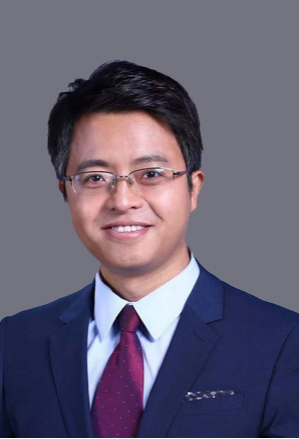
Zhongkui Li China,School of Advanced Manufacturing and Robotics, Peking University
Boya Distinguished Professor
Recipient of the National Science Fund for Distinguished Young Scholars and the National Excellent Doctoral Dissertation Award
Young Changjiang Scholar of the Ministry of Education
Keynote Speech Title:Distributed Trajectory Generation for Multi-Agent Systems: Deadlock Resolution and Full-State Planning
Abstract:Distributed trajectory planning for multi-agent systems is a key technology and a long-standing research focus in automatic control and robotics. It aims to generate trajectories online for each agent using only local information in complex, obstacle-filled environments, while satisfying dynamic and kinematic constraints as well as safety requirements such as inter-agent collision avoidance and obstacle avoidance. This talk presents our team’s recent advances in addressing deadlock, a long-standing challenge in distributed trajectory planning. It also introduces the new problem of full-state planning for underactuated rigid bodies.
Biography:Zhongkui Li is a Boya Distinguished Professor at the School of Advanced Manufacturing and Robotics, Peking University. He is a recipient of the National Science Fund for Distinguished Young Scholars and the National Excellent Doctoral Dissertation Award, and a Young Changjiang Scholar of the Ministry of Education. His research focuses on cooperative control and decision-making for multi-agent systems. He has authored two English-language monographs and published more than 100 journal papers. His honors and awards include the Outstanding Young Zhongguancun Award of the Beijing Science and Technology Awards in 2025; the First Prize for Scientific and Technological Progress from the Chinese Institute of Command and Control in 2023 (second-ranked contributor); the Second Prize in Natural Sciences from the Ministry of Education in 2022 (first-ranked contributor); and the Second Prize of the National Natural Science Award in 2015 (third contributor).
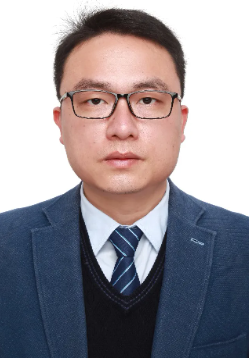
Guanghui Wen China,School of Automation, Southeast University
Vice Dean of the School of Automation
Chief Professor (Tier-2 Professor) and Doctoral Supervisor
IET Fellow
Recipient of the National Science Fund for Distinguished Young Scholars, the National Science Fund for Excellent Young Scholars, and The 18th China Youth Science and Technology Award
Keynote Speech Title:Distributed Optimization and Games in Embodied Swarm Intelligence Systems
Abstract:This talk focuses on distributed optimization and games in embodied swarm intelligence systems. Beginning with the concepts of embodiment and swarm behavior, it explains the characteristics of these systems in terms of physical platforms, environmental interaction, and collective coordination. For distributed optimization, algorithms are developed for different dynamical models, including second-order systems, heterogeneous linear systems, general linear systems, and Euler–Lagrange systems. These include optimization methods adapted to motion characteristics, output coordination, robust optimization, and aggregative optimization, with applications to cooperative sensing and localization using unmanned surface vehicles.
The talk then addresses distributed games, focusing on the coupling between games and control in unmanned surface vehicle systems. An integrated approach is proposed, encompassing fully distributed algorithms for both known and unknown models, together with a simulation platform for game-based adversarial interactions among unmanned surface vehicle swarms. The talk concludes with an outlook on future research directions.
Biography:Guanghui Wen is Vice Dean of the School of Automation at Southeast University, where he is a Chief Professor (Grade II) and Doctoral Supervisor. He is an IET Fellow, Deputy Director of the Jiangsu National Center for Applied Mathematics, and Executive Deputy Director in charge of the Jiangsu Center for Applications of Information Mathematics. His research focuses on distributed control theory and control engineering, as well as the theory and technology of embodied swarm intelligence.
He has published more than 200 academic papers in Nature Reviews Electrical Engineering, Research, National Science Review, The Innovation, and IEEE Transactions, and has authored four academic monographs. His work has received more than 20,000 non-self citations in SCI-indexed publications. Two papers have received best paper awards from international journals, and eight have received best paper awards at domestic and international conferences. He has led more than 30 research projects, including projects funded by the National Science Fund for Distinguished Young Scholars, the Excellent Young Scientists Fund, key projects under the NSFC Joint Funds, key projects under the Ye Qisun Science Fund, and research tasks under the Ministry of Science and Technology’s National Key R&D Program. He has filed more than 90 Chinese invention patent applications, of which 72 have been granted, and holds one granted U.S. invention patent through the PCT route.
He is the founding Editor-in-Chief of Embodied Intelligence and serves on the editorial boards of Automatica, IEEE/ASME Transactions on Mechatronics, IEEE Transactions on Control of Network Systems, IEEE Transactions on Industrial Informatics, IEEE Transactions on Neural Networks and Learning Systems, IEEE Transactions on Intelligent Vehicles, IEEE Journal of Emerging and Selected Topics in Industrial Electronics, and Asian Journal of Control. He has received outstanding editorial board member awards from IEEE Transactions on Industrial Informatics and Asian Journal of Control.
He serves as Deputy Secretary-General of the Chinese Institute of Command and Control (CICC), Chair of its National Defense Education Working Committee, Vice Chair of the Technical Committee on Big Data of the Chinese Association of Automation, and Vice Chair of CICC’s Technical Committee on Embodied Intelligence. His honors include the 18th China Youth Science and Technology Award; one first prize in science and technology and one first prize in technological invention from national academic societies (both as first-ranked contributor); gold medals at the International Exhibition of Inventions Geneva and the London International Inventions Exhibition (both as first-ranked contributor); an Australian Research Council Discovery Early Career Researcher Award (ARC DECRA); the Asia Pacific Neural Network Society (APNNS) Young Researcher Award; the CICC Young Scientist Award; and the first prize of the CICC Innovation Award. The ARC fellowship, the APNNS award, and the two CICC awards were individual honors.

Long Cheng China,University of Chinese Academy of Sciences
Distinguished Professor and Doctoral Supervisor
Fellow of IEEE, IET, and CAA
Recipient of the National Science Fund for Distinguished Young Scholars and the Beijing Science Fund for Distinguished Young Scholars
Keynote Speech Title:Tactile and Force Sensing and Embodied Manipulation Technologies
Abstract:Vision-based robotic manipulation faces performance bottlenecks in contact-rich tasks. Multimodal embodied manipulation, particularly approaches incorporating tactile and force sensing, is therefore attracting growing research interest. This talk presents recent advances by the speaker’s team in high-sensitivity tactile and force sensing and embodied robotic assembly using tactile and force sensing. It concludes with the team’s perspectives on tactile intelligence.
Biography:Long Cheng, Ph.D., is a Distinguished Professor and Doctoral Supervisor at the University of Chinese Academy of Sciences. He is a Fellow of IEEE, IET, and CAA. He serves on the editorial boards of international and Chinese journals, including The International Journal of Robotics Research (IJRR), IEEE/ASME Transactions on Mechatronics, IEEE Transactions on Automation Science and Engineering, IEEE Transactions on Cybernetics, IEEE Transactions on Cognitive and Developmental Systems, SCIENTIA SINICA Informationis, and Acta Automatica Sinica. He is a recipient of the National Science Fund for Distinguished Young Scholars and the Beijing Science Fund for Distinguished Young Scholars.
Honggui Han China,College of Computer Science, Beijing University of Technology
Professor and Doctoral Supervisor
Recipient of the National Science Fund for Distinguished Young Scholars and the National Science Fund for Excellent Young Scholars
Young Beijing Scholar
Young Scientist of the Chinese Association of Automation
Outstanding Young Scientist of Beijing Universities
Keynote Speech Title:Endogenous Security of Large Multimodal Models
Abstract:As large multimodal models are deployed at increasing scale across industries, ensuring their secure operation is becoming increasingly important. To enhance their endogenous security, this research investigates theories and methods for tracing the root causes of trustworthiness deficiencies in multimodal alignment and fusion, quantifying uncertainty in cross-modal generation across multiple scenarios, assessing multilevel coupling among values and optimizing value alignment, and dynamically self-repairing compromised model parameters. These methods are integrated into a comprehensive security framework to provide multidimensional security assurance for large multimodal models.
Biography:Honggui Han is a Professor and Doctoral Supervisor whose research has long focused on intelligent control of complex systems. He has been awarded funding under the National Science Fund for Distinguished Young Scholars and the Excellent Young Scientists Fund, and has been recognized as a Young Beijing Scholar, a Young Scientist of the Chinese Association of Automation, and an Outstanding Young Scientist of Beijing Universities.
He has published more than 100 academic papers and authored five books. He holds more than 60 invention patents granted in China and the United States and has led or participated in the development of more than 10 national, association, and local standards. His awards include the Second Prize of the National Science and Technology Progress Award, the China Youth Science and Technology Award, the First Prize for Scientific and Technological Progress from the Ministry of Education, and the First Prize of the Wu Wenjun Artificial Intelligence Science and Technology Progress Award.
He currently serves as Director of the Engineering Research Center of Digital Community, Ministry of Education, and Director of the Beijing Key Laboratory of Computational Intelligence and Intelligent Systems. He also serves on the editorial boards of journals including SCIENTIA SINICA Technologica and IEEE Transactions on Cybernetics.
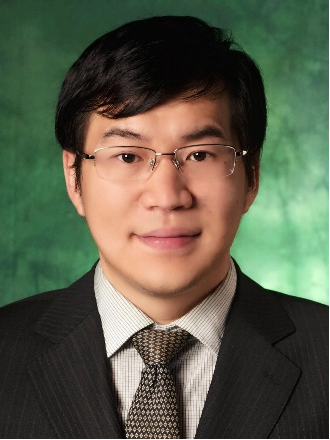
Tao Yang China,State Key Laboratory of Synthetical Automation for Process Industries, Northeastern University
Professor and Doctoral Supervisor
National Young High-Level Talent
Changjiang Distinguished Professor of the Ministry of Education
IET Fellow
Keynote Speech Title:Communication-Efficient Distributed Nonconvex Optimization Algorithms
Abstract:Distributed optimization enables agents to collaboratively solve a global optimization problem through local computation and information exchange. It has broad applications in networked control, intelligent manufacturing, and multi-agent systems. However, limited communication resources and nonconvex objective functions jointly create significant challenges for algorithm design and convergence analysis. This talk presents communication-efficient distributed nonconvex optimization algorithms and their convergence theory within the distributed gradient-tracking framework.
First, under finite-bit communication constraints, a dynamically quantized gradient-tracking algorithm is designed to achieve exact global linear convergence for nonconvex objectives satisfying the Polyak–Łojasiewicz (P–Ł) condition. Second, several classes of compressed gradient-tracking algorithms are proposed for general communication compression schemes, with guarantees of convergence to stationary points for general nonconvex objectives and linear convergence guarantees under the P–Ł condition. Finally, for settings with unavailable gradients and weight-unbalanced directed networks, a zeroth-order compressed Push–Pull algorithm is studied, and corresponding nonconvex convergence guarantees are established.
Biography:Tao Yang is a Professor and Doctoral Supervisor at Northeastern University, a selectee of a national high-level young talent program, a Changjiang Distinguished Professor of the Ministry of Education, and an IET Fellow. He received his Ph.D. from Washington State University, USA, in 2012. He conducted postdoctoral research at KTH Royal Institute of Technology, Sweden, from 2012 to 2014, and served successively as a postdoctoral researcher and Scientist at Pacific Northwest National Laboratory, USA, from 2014 to 2016. From 2016 to 2019, he was an Assistant Professor at the University of North Texas, USA. In 2019, he joined the State Key Laboratory of Synthetical Automation for Process Industries at Northeastern University.
His research focuses on distributed cooperative control and optimization, industrial artificial intelligence, and the integration of intelligent optimization and control. He has led key projects and research tasks under major projects of the National Natural Science Foundation of China, as well as research tasks under the National Key R&D Program of China. He has published more than 100 journal papers, including over 50 in IEEE Transactions and IFAC journals. He received the Second Prize of the National Teaching Achievement Award in Higher Education (Postgraduate Education) in 2022 (fourth of five contributors) and the Second Prize in Natural Sciences from the Chinese Association of Automation in 2023 (first of five contributors).
He currently serves as Deputy Editor-in-Chief of Acta Automatica Sinica, an editorial board member of IEEE Transactions on Control Systems Technology, IEEE Transactions on Control of Network Systems, and IEEE Transactions on Neural Networks and Learning Systems, and Chair of the Technical Committee on Big Data of the Chinese Association of Automation. He is also a member of several technical committees of IEEE CSS, IEEE IES, and IFAC.
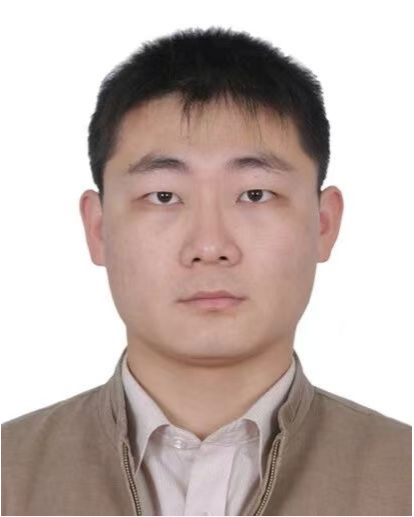
Tengfei Liu China,State Key Laboratory of Synthetical Automation for Process Industries, Northeastern University
Professor
Recipient of the National Science Fund for Distinguished Young Scholars (Young Scientists Fund Category A)
Keynote Speech Title:An Interconnected Systems Approach to Nonlinear Control
Abstract:Nonlinear dynamics and network interconnections are major sources of system complexity and key factors in achieving high-performance control over a wide range of operating conditions. As control methods for individual systems and devices mature, and sensing, communication, and computing technologies advance, enabling higher levels of cooperation among controlled systems through physical coupling or information exchange has become an important trend. The principal obstacles, however, continue to arise from nonlinear dynamics and network interconnections. Drawing on representative control examples from the past two decades, including event-triggered control, feedback optimization, and constraint-satisfaction control, this talk examines how interconnection properties affect closed-loop nonlinear dynamics. Building on these insights, it develops new tools to address emerging challenges in cooperative optimal control of networked nonlinear systems.
Biography:Tengfei Liu is a Professor at the State Key Laboratory of Synthetical Automation for Process Industries, Northeastern University. He received his Ph.D. from the Australian National University in 2011. His research focuses on the stability and control of networked nonlinear systems and their applications to industrial processes and unmanned systems. He has conducted extensive research on extending the nonlinear small-gain theorem to networked interconnected systems, as well as on quantized control, event-triggered control, distributed cooperative control and optimization, and safety control. He has received a Second Prize of the National Natural Science Award and several best paper awards at international conferences.
He has undertaken national research projects including the National Science Fund for Distinguished Young Scholars (Young Scientists Fund Category A), a Key Program project of the National Natural Science Foundation of China, and a Category B project under the NSFC Science Fund for Creative Research Groups. He serves on the editorial boards of international journals including IEEE Transactions on Automatic Control.